Fifteen minutes a day. One small step at a time. The kind of math confidence that lasts.
"I'm just not good at math"
If you've heard that from your child, you know how early it starts — and how quickly it hardens into something they believe about themselves.
Here's what's worth knowing: it's almost never true. Children who decide they're bad at math are usually children who missed one small thing, early, and have been quietly working twice as hard ever since to keep up.
A child still counting on their fingers for 8 + 5 can hold their own in second grade. By fourth, when the class moves to multi-digit addition, that same child is suddenly the slow one — and nobody can point to the lesson where it went wrong, because nothing did. A step just never had time to become automatic.
That's the problem Come On Math was built to solve. And it's a solvable problem.
Small steps, properly finished
Every topic is broken into the smallest steps that stand on their own. Each one has to be comfortable before the next arrives.
Not "attempted." Not "got it right once." Comfortable — right nearly every time, without hesitating, across many days. Only then does your child move on.
That's the whole method, and it's why it works. A child who has truly finished a step never comes back to it. The confidence carries into the next step, and the one after that, and by the time the hard topics arrive the ground underneath is solid.
Most math programs move children forward on a schedule. This one moves them forward when they're ready. That difference is everything.
Fifteen minutes a day
Short enough to fit a real evening. Long enough to change things.
Adjust it however suits your child — longer on a good day, shorter on a hard one. Come On Math fits around your life rather than reorganizing it.
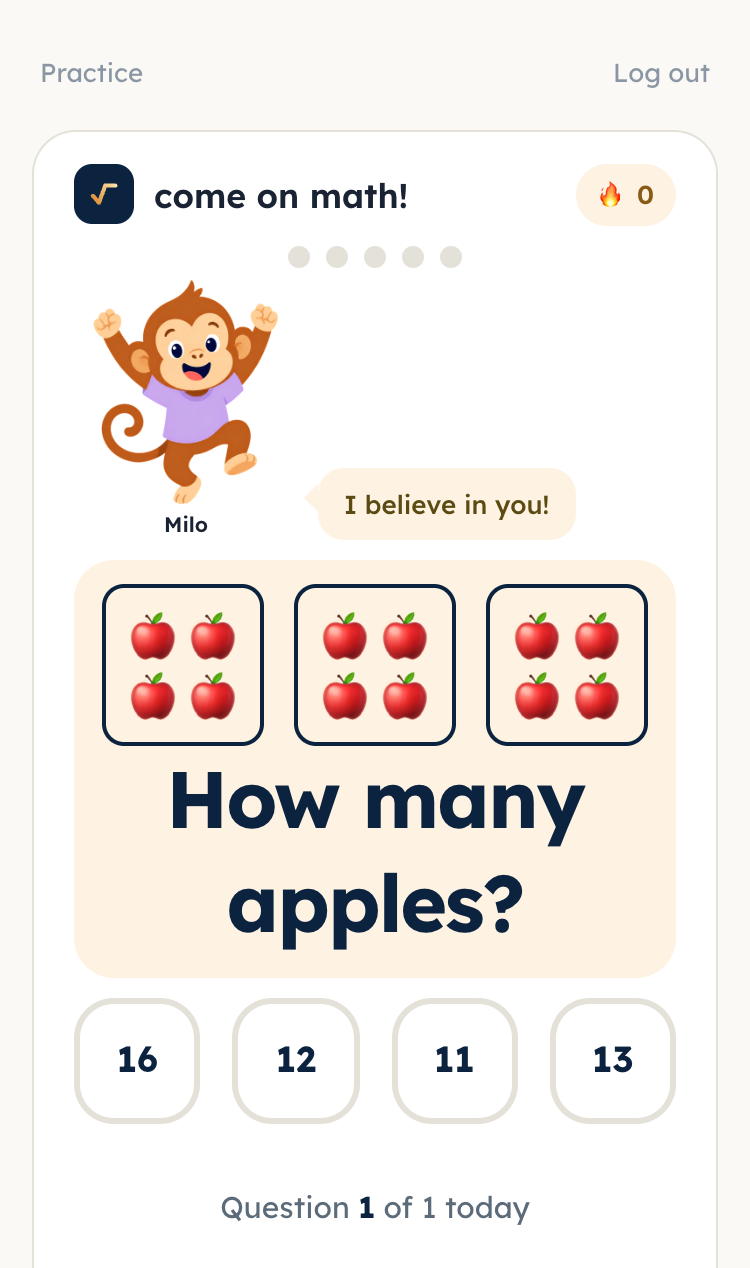
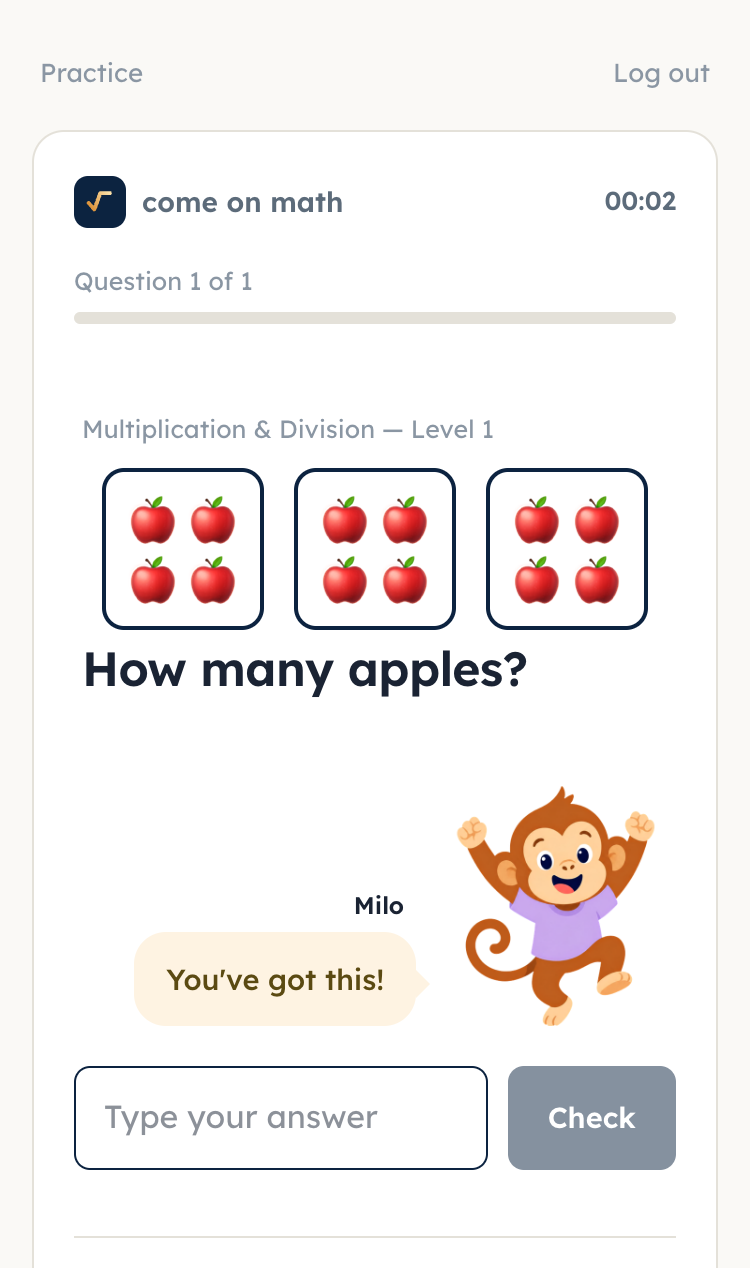
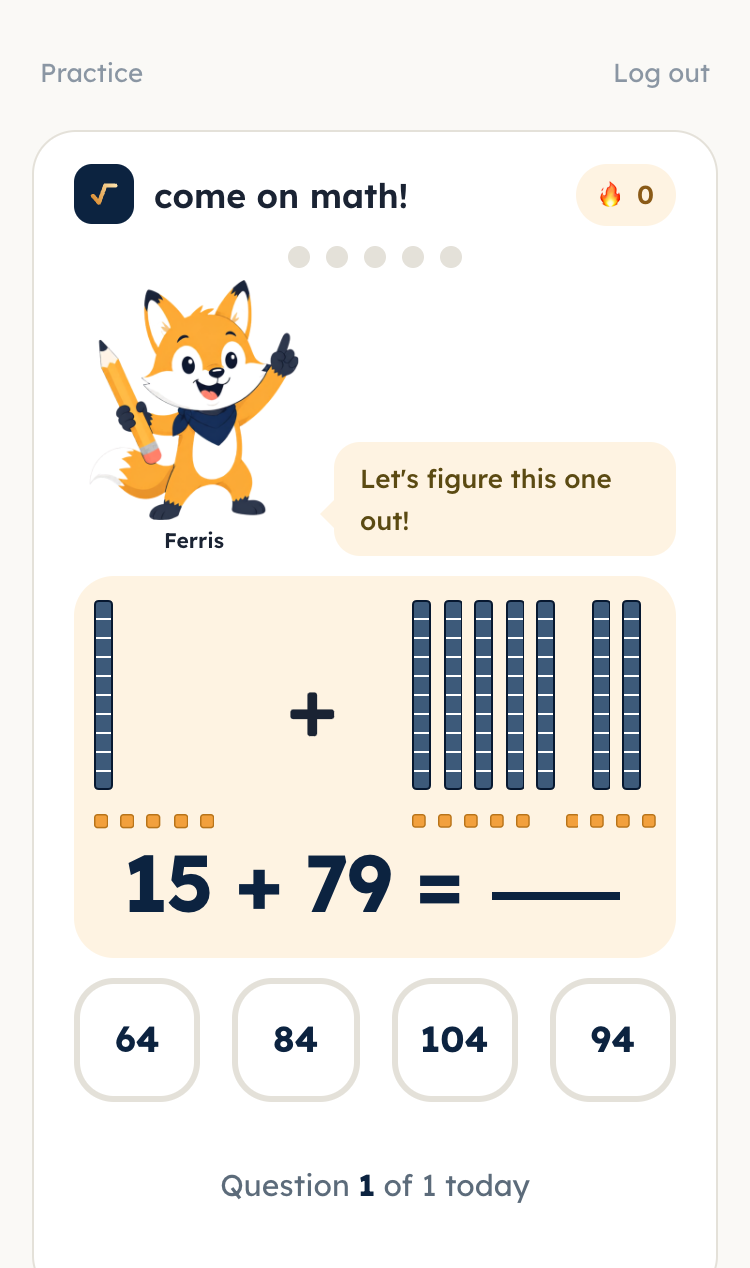
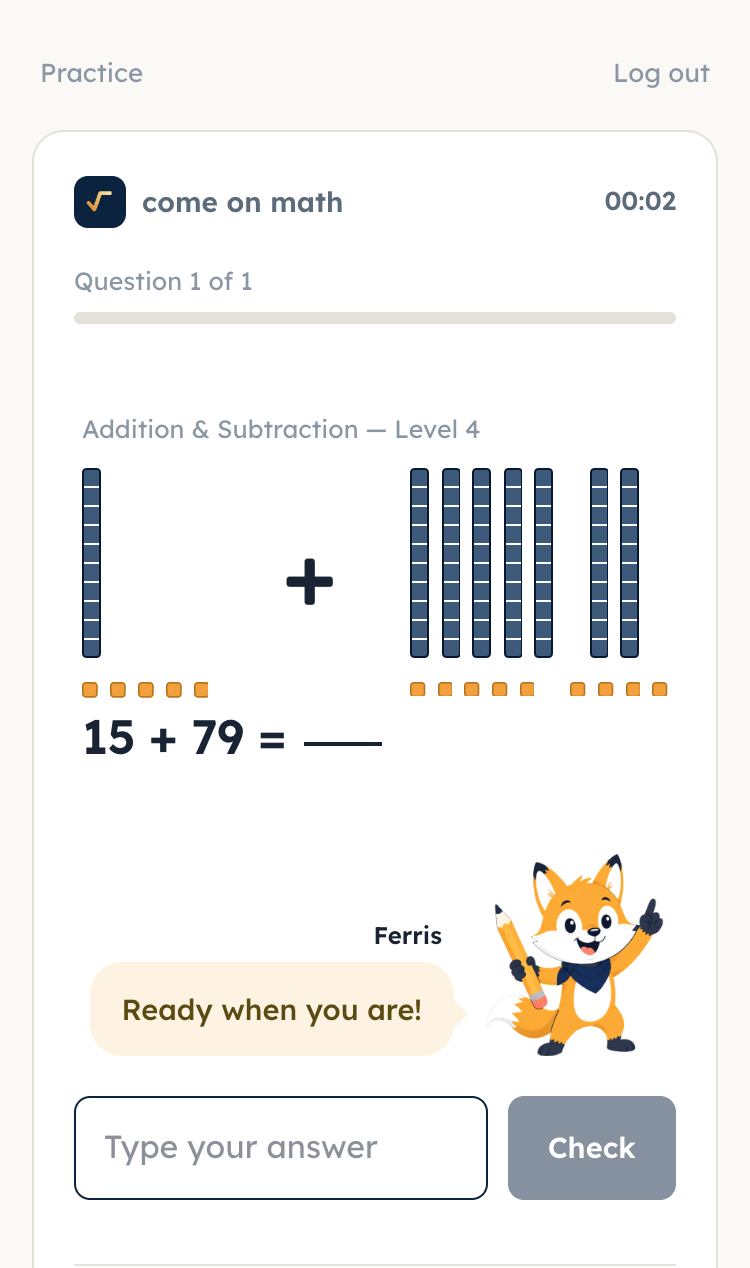
And it doesn't feel like catch-up. Each session is a handful of questions, a companion who's pleased to see them, and the quiet satisfaction of a step finishing. Children come back to it because it feels good to be getting better at something.
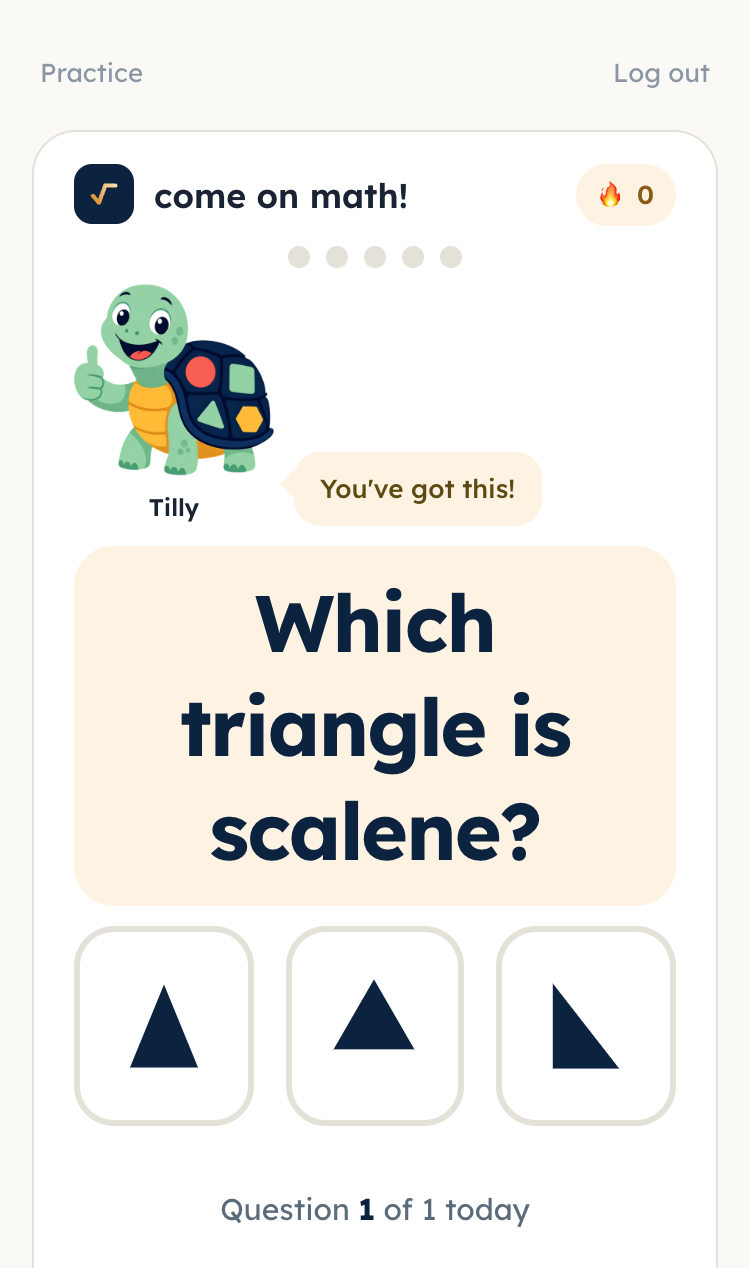
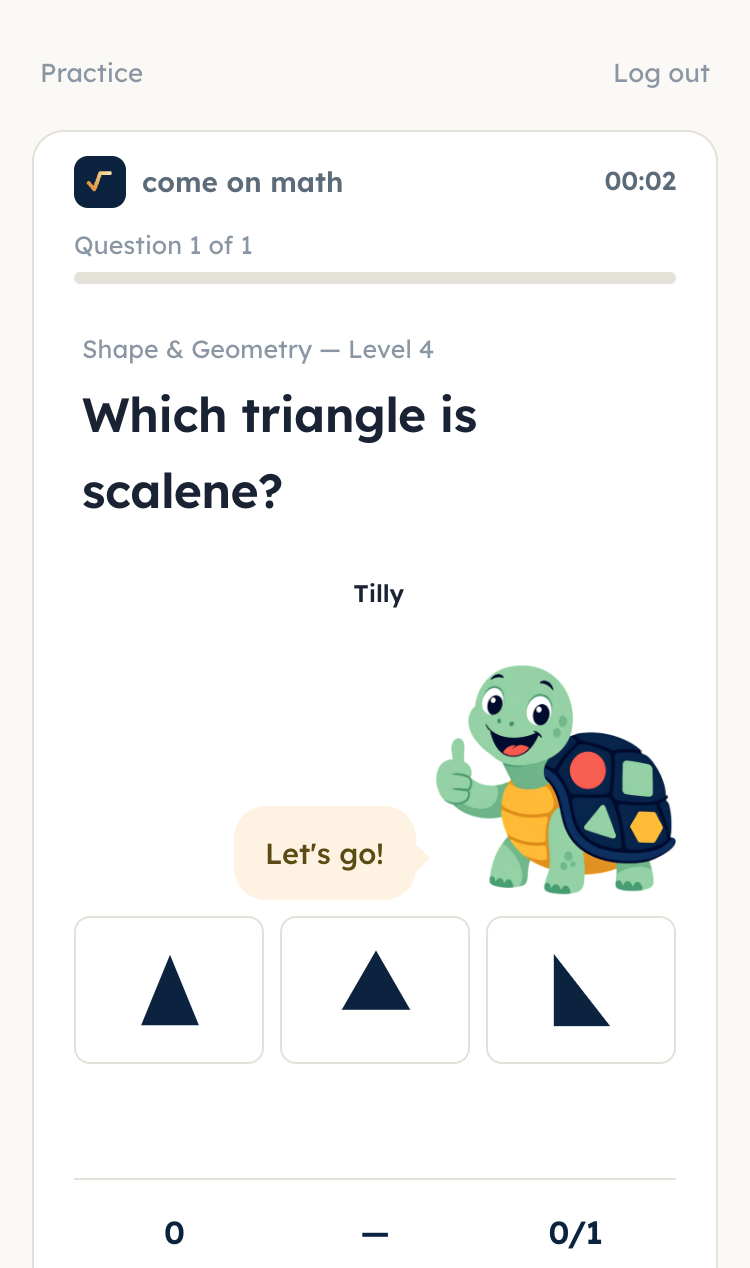
The companions
Every child has one, chosen when their profile is made.
 Milo
 Ferris
 Remy
 Baxter
 Tilly
 Percy
 Ollie
 Jax
It makes everything else you're doing work harder
Come On Math isn't a full curriculum, and that's the point. Your child's math teaching — classroom, kitchen table, wherever it happens — stays exactly where it is.
This is the layer underneath: the part that turns a concept your child has met into one they own. Whatever you're already using, this makes it stick.
One job, done properly, beats ten done adequately. That focus is why fifteen minutes is enough.
What changes
- Confidence goes first. Faster answers, less hesitation, fewer fingers. You'll notice it within weeks.
- Then schoolwork gets easier — not because the work got simpler, but because your child stopped spending all their effort on the parts that should be automatic.
- And you'll finally know where they are. Every step shows plainly what's finished and what's next. No more guessing whether they've got it.
Give it two weeks
Pick a topic. Fifteen minutes a day. See what your child sounds like at the end of it.
The foundation builds itself from there — and it doesn't come apart.